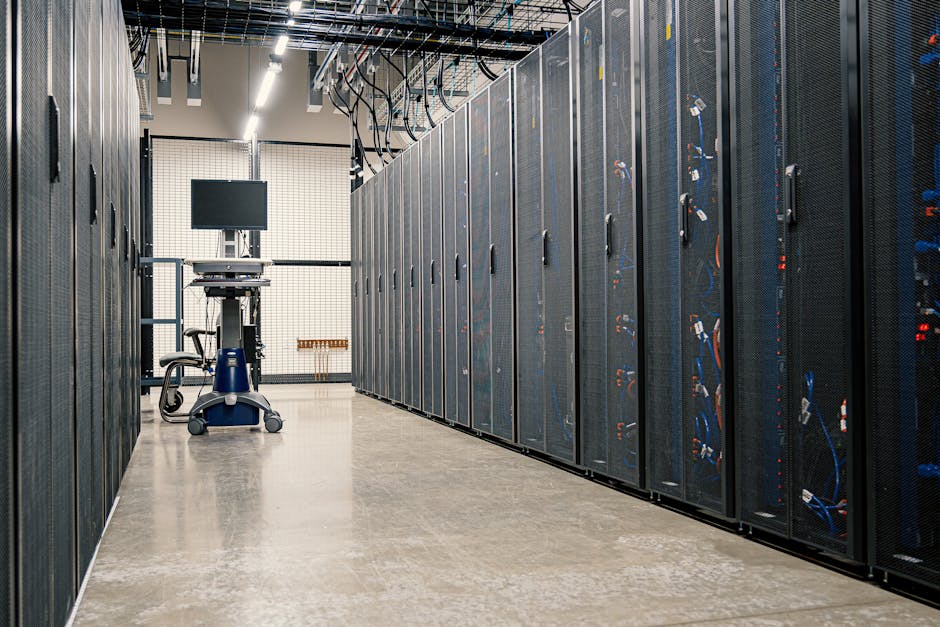
The DataOne project, billed as the largest planned artificial‑intelligence data center on the East Coast, has come under federal scrutiny after a visual investigation by the watchdog group Floodlight. The probe, conducted in mid‑August, used thermal‑imaging drones to capture footage of the Vineland, New Jersey site, revealing that the construction zone was already running dozens of gas‑powered generators despite the facility being only partially completed.
According to Floodlight’s findings, at least 45 generators were active on the premises, a number that far exceeds what would be expected for a construction site of this stage. The organization claims the generators are operating without the necessary environmental and building permits, a breach that could constitute a violation of federal law governing emissions and energy infrastructure.
DataOne, the company behind the project, has positioned the Vineland campus as a cornerstone for the next wave of AI workloads, promising massive compute capacity and low‑latency connectivity for cloud providers. Such facilities typically rely on backup power to guarantee uninterrupted service, but they are required to secure permits that address noise, air quality, and fuel storage regulations before any generators can be installed or run.
The alleged infractions have drawn attention from federal agencies tasked with enforcing environmental and energy standards. While the specific agency leading the inquiry has not been named, the accusation suggests that the Department of Energy, the Environmental Protection Agency, or the Federal Energy Regulatory Commission could become involved. The outcome may affect not only DataOne’s timeline but also broader plans for AI‑focused data centers across the United States.
Local officials in Vineland have expressed concern over the potential impact on community health and safety. Residents have previously raised questions about the cumulative emissions from large‑scale data centers, and the presence of unpermitted generators adds a new layer of environmental risk. The situation underscores the tension between rapid AI infrastructure expansion and the regulatory frameworks designed to protect air quality and public welfare.