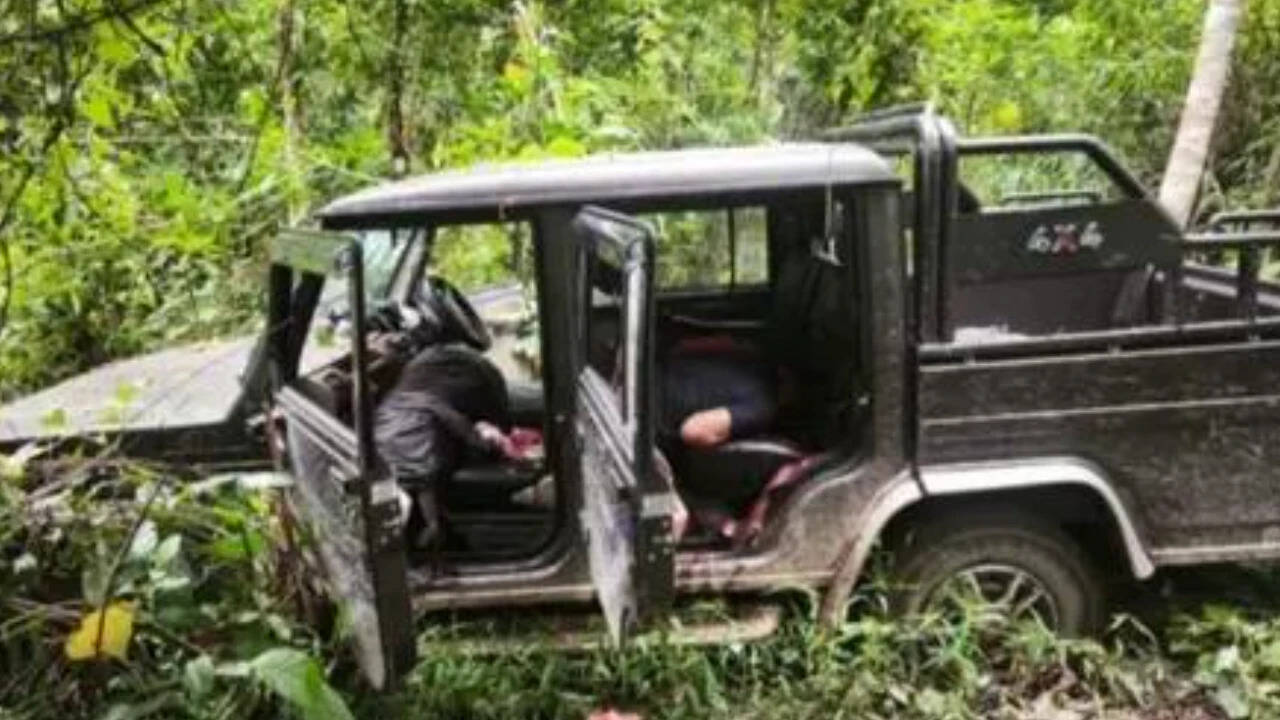
A survivor of a recent ambush in Manipur recounted that the gunmen were dressed in camouflage, raising questions about the identity of the assailants.
By SamacharDaily Editorial Team••2 min read
A resident of Manipur who survived a violent ambush on a highway last week told investigators that the assailants were dressed in camouflage uniforms, a detail that could help authorities narrow down the perpetrators. The survivor, who asked to remain unnamed for safety reasons, said the attack occurred near the town of Churachandpur around dusk, when a group of five gunmen opened fire on his vehicle, forcing it to stop. He described the uniforms as resembling those worn by the Indian army and paramilitary forces, though the attackers did not display any insignia or identification badges. According to the survivor, the gunmen used automatic rifles and a hand‑grenade before fleeing into the surrounding forest. He managed to escape with minor injuries and later reported the incident to local police, who have now opened a case and are reviewing CCTV footage from nearby checkpoints. The police spokesperson confirmed that the investigation is ongoing and that the camouflage clothing is a key lead, but emphasized that wearing such attire does not automatically implicate any particular force.
The incident adds to a series of violent encounters reported in the northeastern state over the past months, where civilians and security personnel have been targeted in remote areas. While the exact motive behind the ambush remains unclear, officials are exploring possibilities ranging from insurgent activity to intra‑tribal disputes. The survivor's testimony is being cross‑checked with other eyewitness accounts and with patrol logs to determine whether the attackers were irregular militants attempting to blend in or members of an organized outfit using military‑style gear to sow confusion.
Manipur has been grappling with a complex security environment marked by insurgent groups, ethnic tensions, and occasional clashes involving security forces. The use of camouflage uniforms in the ambush raises concerns about the potential for misidentification, which can exacerbate mistrust between civilians and the armed forces. If the attackers were indeed militants masquerading as soldiers, it could indicate a tactical shift aimed at creating ambiguity and undermining confidence in state security. Conversely, if the uniforms belong to official personnel, it would demand a thorough inquiry into possible misconduct or rogue elements within the forces. The incident also highlights the challenges faced by law enforcement in distinguishing between legitimate security operations and illicit violence in a terrain where multiple armed actors operate. The outcome of the investigation could influence future deployment strategies, community‑police relations, and broader policy decisions regarding counter‑insurgency measures in the region.
Stakeholders, including the state government, central security agencies, and local community leaders, are closely monitoring the case. A transparent probe could help restore public trust, while any perceived cover‑up might fuel further unrest. The survivor's account, therefore, is not just a piece of evidence but a focal point in a larger debate over security, accountability, and the rule of law in Manipur.
India and ASEAN member states met to identify scalable cooperation areas in agriculture, focusing on technology sharing, trade facilitation and climate‑resilient farming.
Punjab Chief Minister Bhagwant Mann on Wednesday called for a formal partnership with the Confederation of Indian Industry to fast‑track sustainable crop‑residue handling and boost horticultural productivity through shared technology.
Karnataka will restart college and university student union elections this academic year, dropping caste‑based quotas and reserving a set of seats for women to foster leadership and democratic practice.
•1 min read
The Daily Briefing
Verified reporting and explanatory briefings delivered every morning. Zero fluff.