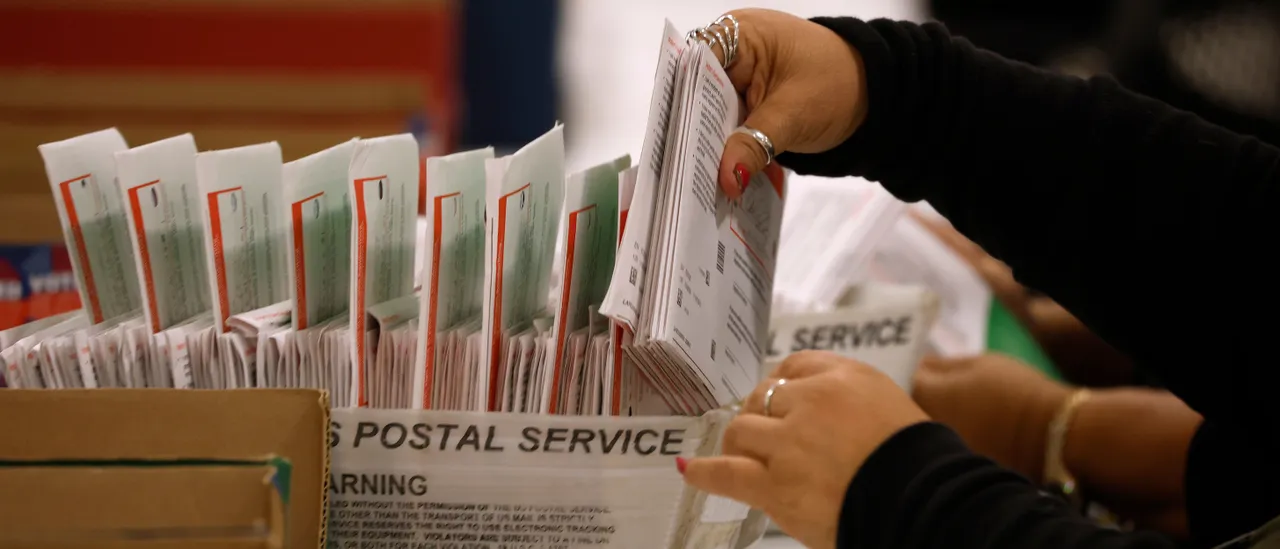
The appeals court has ruled in favor of Trump on mail voting, granting him a legal victory while the Supreme Court reviews his executive order. In a decisive move, the three-judge panel rejected Trump's appeal, affirming that certain restrictions on mail-in ballots were constitutional under existing law. This judgment effectively blocks further challenges to the administration's approach to election security protocols, marking a pivotal moment in ongoing disputes over voting access and federal election standards.
The case stems from a prolonged legal battle initiated by multiple states seeking to limit the scope of mail voting following the 2020 election cycle. Federal courts had previously allowed some restrictions, but the appeals process created uncertainty about the enforceability of those limits. The recent ruling provides clarity, though it leaves the ultimate fate of the executive order uncertain pending Supreme Court intervention, with legal teams already preparing arguments for oral argument and anticipating a contentious hearing schedule.
With the Supreme Court now taking up the matter, the political stakes remain high. Legal scholars note that the decision will set a precedent for how executive orders interact with state-level election regulations. The Court's composition—split along ideological lines—means the outcome could significantly affect federalism debates and the balance of power between the presidency and the judiciary, particularly as other cases involving voting rights reach the docket and the nation watches the unfolding drama.
Beyond the immediate legal resolution, this episode highlights growing tensions between executive branch initiatives and judicial review mechanisms. As the case progresses through the appellate system, stakeholders watch closely for potential precedents that could shape future voting rights legislation and court docket priorities nationwide. Observers expect the Supreme Court to issue its opinion within weeks, potentially before the next presidential election cycle begins, which could reshape electoral processes for years to come.
Media analysts suggest that this ruling could embolden other administrations to pursue similar restrictions on mail-in voting, creating a ripple effect across state elections. The decision also underscores the increasing role of the judiciary in mediating conflicts between federal election policies and state sovereignty, a dynamic that has intensified in recent years amid partisan polarization and calls for election reform.