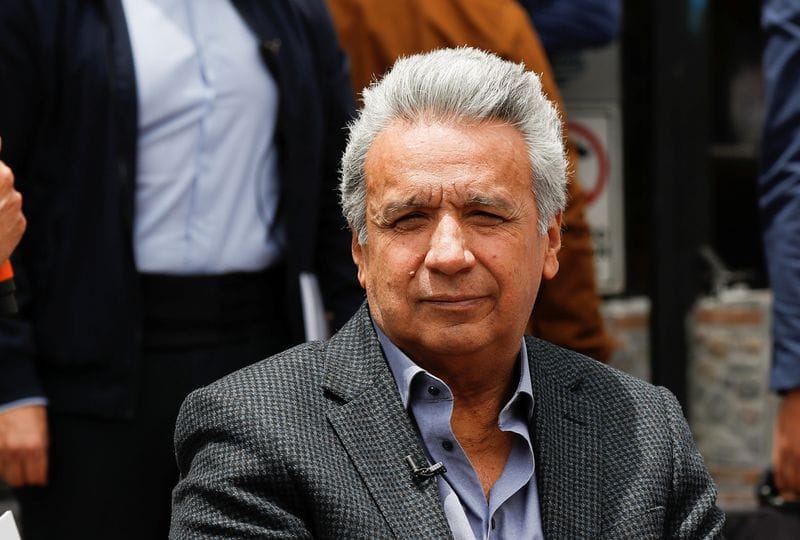
The Criminal Court of Quito delivered its verdict on Friday, sentencing former President Lenín Moreno to prison after finding him guilty of receiving illegal payments in connection with the Coca‑Codo Sinclair hydroelectric project, the country’s biggest power‑generation facility. Prosecutors had alleged that Moreno, who served as president from 2017 to 2021, accepted bribes from contractors seeking favorable terms during the plant’s construction, which began in 2015 and was completed in 2022. The court’s decision was based on a series of financial records, witness testimonies and intercepted communications that allegedly demonstrated a pattern of illicit payments funneled through shell companies linked to the former leader.
Moreno’s legal team argued that the charges were politically motivated and that the former president had acted in the nation’s interest by pushing forward a critical infrastructure project. Nonetheless, the judges rejected the defence, stating that the evidence showed a clear breach of Ecuadorian anti‑corruption statutes. While the exact length of the prison term was not disclosed in the initial ruling, the court ordered Moreno to serve a custodial sentence and imposed a substantial fine, signalling a firm stance against high‑level graft. The verdict comes as part of a broader wave of investigations into public officials across Latin America, where anti‑corruption agencies have intensified scrutiny of large‑scale public works.
The decision reverberated through Quito’s political circles, with opposition parties welcoming the outcome as a sign of accountability, while allies of Moreno warned of potential destabilisation ahead of upcoming municipal elections. International observers noted the case as a test of Ecuador’s judicial independence and its ability to confront entrenched patronage networks that have historically plagued the nation’s development agenda.