
India’s ambition to design and manufacture an indigenous jet engine for its combat aircraft has entered its fourth decade without achieving operational deployment on frontline fighters, leaving the Indian Air Force (IAF) fully dependent on foreign powerplants across its entire combat fleet.
The gap was highlighted in an analytical assessment by defense analyst Palak Gupta on CNBC-TV18, which detailed how despite decades of targeted public funding and research initiatives, indigenous aero-engine development remains one of the most persistent bottlenecks in India's defense-industrial ecosystem.
The core of India's aero-engine research began with the Gas Turbine Research Establishment (GTRE) in Bengaluru and the Kaveri engine program, initiated in the 1980s to power the indigenous Light Combat Aircraft (LCA) Tejas. However, the Kaveri powerplant suffered from chronic development hurdles, including shortfalls in required wet and dry thrust output, excessive weight, and metallurgical challenges in manufacturing single-crystal turbine blades capable of withstanding extreme turbine inlet temperatures exceeding 1,400 degrees Celsius.
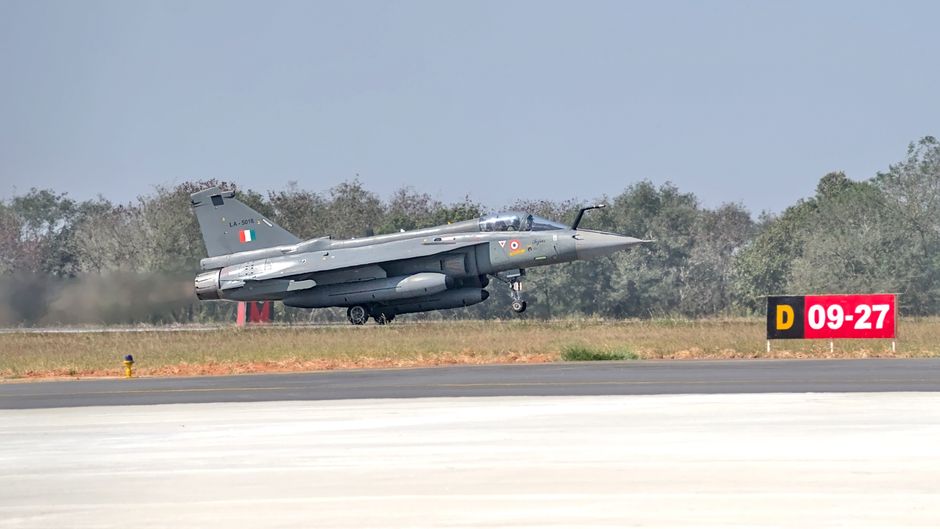
As a result, the Kaveri engine was officially decoupled from the Tejas program. Today, every operational combat aircraft in the Indian Air Force relies on foreign propulsion technology. The twin-engine Sukhoi Su-30MKI fleet flies with Russian AL-31FP engines; the Mirage 2000 and Rafale fleets operate with French Snecma powerplants; the MiG-29 relies on Russian RD-33 engines; and the indigenous Tejas Mk1 and Mk1A fighters are powered by American General Electric F404-GE-IN20 engines.
To address ongoing propulsion deficits for upcoming platforms such as the Tejas Mk2 and the fifth-generation Advanced Medium Combat Aircraft (AMCA), India has engaged in international co-development negotiations. These include a licensed co-production memorandum of understanding with General Electric for the F414-INS6 engine and ongoing discussions with European engine manufacturers such as Safran and Rolls-Royce.
However, defense analysts note that licensed assembly does not automatically transfer proprietary core hot-section metallurgy and single-crystal casting techniques. Until domestic metallurgical laboratories resolve fundamental material-science limitations, strategic self-reliance in military aerospace propulsion remains an ongoing challenge.


